Pages

Thursday, April 23, 2015

Creature Feature: Rhinoceros

Good evening everyone! I have decided to write a blog on rhinoceros in a different fashion: with drawings!! Why? Well, unfortunately, there are millions of graphic pictures you can find on the internet involving rhino poaching, some of which I have used in earlier blog posts. Tonight, I want to give the subject a more read-able face. As a warning: I am a horrible artist, and as you scroll down you will be exposed to the horror of my attempted drawings, but I figured it would be less painful than images of slaughtered animals and their orphaned young. So here we go, let's talk a bit about rhinos: 


If you want to learn more or donate, I've included quite a few links below. And as I've said before, you can help simply by saving energy. Whether its recycling, saving water, or consuming less, saving energy saves resources and habitat, which helps animals out in the wild. (For example, all of my drawings on this post were done on the back of used paper!)


I hope you enjoyed reading, and thank you so much for checking out my blog!! 

Monday, April 20, 2015

News Review: Ricky Gervais Against Trophy Hunting

Hello all! Quick post for today- just wanted to showcase what I think is the best use of fame. Actor/writer/producer Ricky Gervais has spoken out against trophy hunters, showing his support of wildlife conservation. 


The best example of a trophy hunter I could think of.
(Just keep in mind that many sport hunters are avid conservationists as well,
and I am in no way implying they all have Gaston's attitude.)
If you don't know already, trophy hunting is the hunting of wild animals primarily for sport and to claim a part of the slain animal as a memorial (aka a "trophy", such as horns, antlers, head). There has always been controversy surrounding trophy hunting, and its morality, especially when the animal's carcass is wasted and not eaten and you can read more about it here. In my personal opinion, I don't have a problem with trophy hunting as long as it's: 
a) done in a lawful manner, following the area's bag limits, seasons, ect. 
b) done as humanely as possible
c) done sustain-ably by only hunting animals whose populations are stable 


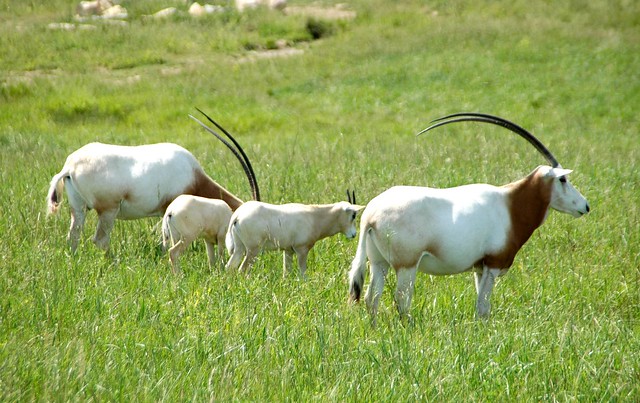
This is the Scimitar-Horned Oryx, now extinct in the wild due (in part) to trophy hunting. 
In my part of the US, the spotlight species to trophy hunt is the whitetail deer. They are overpopulated, and hunting them could be considered essential to the balance of the ecosystem, since it seems they are only preyed upon by automobiles. But out in Africa, trophy hunting takes on a much more harmful role. Big African animals are aesthetically prized, and for many hunters, these majestic animals only have a place in the world if dead on their wall. Now, if all African game was as overpopulated as the white-tail deer, I would personally have no problem with trophy hunting these animals. However, many African species are Threatened, Endangered, or even Critically Endangered. The species most sought after for the challenge they present are called the Big Five: African elephants, black rhinoceros, cape buffaloes, African lions, and leopards. Just out of those five, elephants and lions are endangered, and the black rhino is CRITICALLY endangered (look for my next blog on them). That means that conservationists are struggling to keep these species extant, and are desperately fighting against habitat loss and poaching to save the species. And trophy hunting is added to the list on top of that too! How completely ridiculous and unnecessary,- this is how we lose species people.  


African lions are powerful predators, but no match for human weapons, and they could be lost forever. 
The specific incident I wanted to tell you about is of a female hunter who posted images online of her with African animals she killed, such as giraffes and lions. Mr. Gervais commented on her pictures, expressing how much he disagreed with the morality of her hunting. You can read a great summary of the whole story right here, and I think it's definitely worth a look.

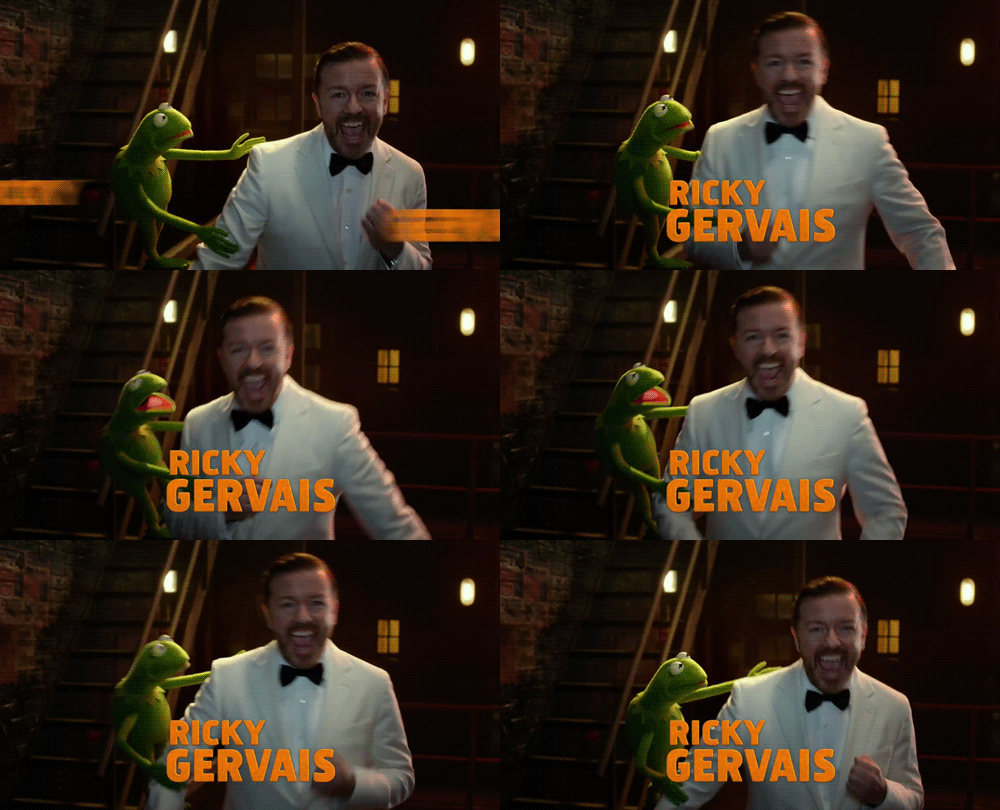
How could I not put this GIF here? 
I know I've been a bit slow getting new posts up, but please keep checking back- I have a few in the works! As always, thank you all so much for reading! 

Tuesday, March 17, 2015

Creature Feature: Saint Patrick's Snakes


Top of the mornin' to you all! Er, afternoon. I know I haven't posted much lately- my life has been a bit hectic- but I plan on writing much more in the next coming weeks! Today I'd like to focus a bit on a myth surrounding Saint Patrick's Day, and, no, it doesn't involve alcohol (sorry to disappoint!). 

I'll start by quoting National Geographic: 

"The St. Patrick mythology includes the claim that he banished snakes from Ireland.
It's true no snakes exist on the island today, Freeman said. But they never did.
Ireland, after all, is surrounded by icy ocean waters—much too cold to allow snakes to migrate from Britain or anywhere else.
But since snakes often represent evil in literature, "when Patrick drives the snakes out of Ireland, it is symbolically saying he drove the old, evil, pagan ways out of Ireland [and] brought in a new age," Freeman said.
The snakes myth and others—such as Patrick using three-leafed shamrocks to explain the Holy Trinity (Father, Son, and Holy Ghost)—were likely spread by well-meaning monks centuries after St. Patrick's death, Freeman said."

There ya have it folks- Saint Patrick never drove the snakes out of Ireland. The country is one of only a few in the world that doesn't have snakes (such as Greenland and Antarctica). Since snake populations are fairly slow to colonize new areas, they never made it across from Britain before the melting glaciers from the Ice Age separated it from Ireland completely. In fact, the emerald isle only has one native reptile: the viviparous lizard. The snakes were merely a representation of evil. (You can read more here!)
Snakes have been used as a symbol of evil in a variety of contexts. For example, in the Bible, a serpent lures Eve to eat the forbidden fruit in the Garden of Eden. And they were used to represent Jews in antisemetic propaganda (like the children's story The Poisonous Serpent). In Norse mythology, the god Jormungandr, who looks like a snake, is the arch enemy of Thor. 
But it's not all bad. The staff of Hermes with two entwined snakes, known as the "caduceus", is commonly used for North American medical organizations. And many groups throughout history saw snakes as representations of love, power, and other positive qualities so much so that they incorporated serpent images in their jewelry. 


How can you not love a face like that?
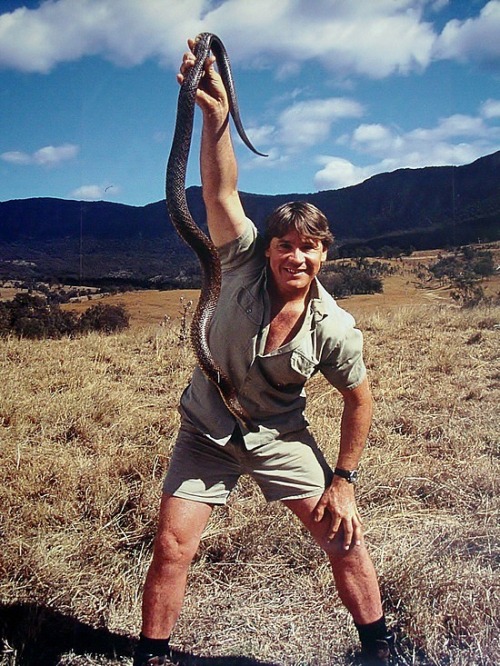
I know there are a lot of people out there who are afraid of snakes, and many who may even want them eradicated. But let me point out that snakes, like all animals (except mosquitoes) have a very important role in the ecosystem. Although they can be deadly, most want nothing to do with humans and are quite afraid of us. So don't get your facts from that Anaconda movie. If you see a snake, just don't touch it. And if anyone needs help remembering that, you have my permission to tie them to a chair and make them listen to this Steve Irwin-inspired song.  

As always, thank you for reading! I hope you come back soon to see my latest posts, and Happy Saint Patrick's Day! 

Sunday, January 18, 2015

News Review: Coral, Chytrid, and Discovery Channel Changes?

We aren't doomed! Yay! I mean, uh, "ribbit".
A chytrid fungus that is too long to type out has been the villain behind a recent decline of amphibian species. And by "decline", I mean over 1/3 of all amphibian species have either gone extinct or are now listed as "threatened", or worse, because of it. A recent study from the University of South Florida revealed that oak toads can develop an immunity to the chytrid fungus! This immunity could be the key to saving the world's amphibians, which is great news! And now for a frog joke: Why are frogs always happy? They eat whatever bugs them!


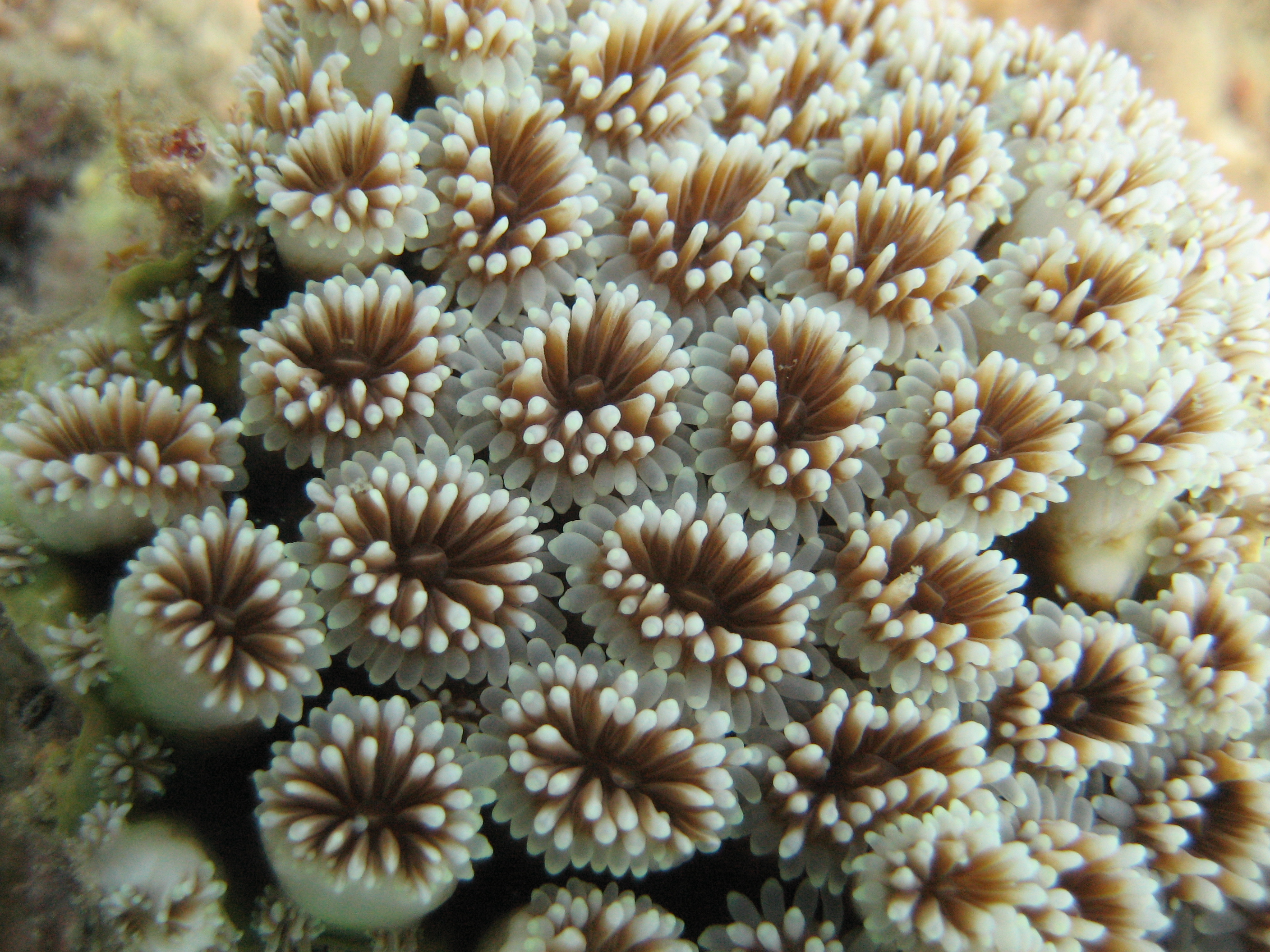
Remember in my last blog I talked about being an activist? Well, here's your chance! The Mid-Atlantic Fishery Management Council’s Deep Sea Corals Amendment 16 to the Mackerel, Squid, and Butterfish Fishery Management Plan (great Odin's raven, what a mouthful!) is a law that will help protect corals on the East Coast of the US from trawling, a destructive type of commercial fishing. On Earthjustice, you can send a quick message supporting this amendment! I'm not going to explain right now how important corals are to the ocean, or how important the ocean's health is to us, but to put it simply, IT'S IMPORTANT! So please just take a minute and support the protection of our ocean. 

The existence of aliens is more logical....
This is not the first time I've mentioned the Discovery Channel on my blog. Recent rants have included Shark Week, Eaten Alive, and their fake megalodon and mermaid specials. Long story short, the Discovery Channel has strayed from their educational programming, to say the least. Now, Rich Ross, Discovery Channel's new president, claims they will stop making things up. "I don't think it's actually right," he said. NO, REALLY? Do you know how many people actually believe megalodon exists, or worse, that mermaids exist, thanks to your programming?? Too many!!! There are so many fascinating things that are true about animals. Although I am doubtful, I really really hope he keeps his word. 

As always folks, thanks for reading! I have some more posts in the works so keep checking back! 

Careers in Wildlife Conservation

Howdy folks! I wanted to write a quick post about careers in conservation, and what you can do to help outside of a formal career. 

Picture credit: reserveamerica.com
Careers 

Wildlife conservation is a very rewarding career field because these professionals really make a difference in the world! There are many areas you can explore:

Wildlife Management: invasive species control, habitat restoration- check out US Fish and Wildlife and the US National Park Service 
Research: population biology, ecology, resource management, habitat preservation- try the EPA, and a great place to look for jobs is the Texas A&M Job Board, they have internships and volunteer opportunities too!
Education: nature centers, zoos, aquariums- take a look at the Association of Zoos and Aquariums

Keep in mind, I'm just brainstorming here, trying to give you a few suggestions, and there are a whole lot of jobs that I'm sure I haven't even thought of! But if you are interested in any of these topics, the links I included are great places to start. My best advice is don't be afraid to reach out! For example, I went on the Texas A&M Job Board and found an internship in Colorado. Even though I couldn't commit to it, I sent an e-mail to the listed contact, and, thanks to a wonderful park ranger, ended up volunteering for two weeks at Rocky Mountain National Park! 
I'm very proud of this picture I took in Colorado! 
Education 

If you're really interested in a career in wildlife conservation, take a look at educational institutions that will prepare you for one. If anyone reading this is around college age, these school programs are definitely worth your consideration (there are plenty more around the country, go ahead and Google it!)

Conservation and Wildlife Management at Delaware Valley College (my favorite!) 
Ecology and Evolutionary Science at Rutgers University
Fish and Wildlife Biology and Management at SUNY
Natural Science at Colorado State University  

I thought this was a cute picture :)
Volunteering

Don't want a career in this field? No problem! Many organizations use the help of volunteers to help promote conservation! Check with your local zoo or aquarium for volunteer opportunities, the National Park Service again, or even your local town may have something! The Texas A&M site I linked before is helpful too. If you want a real adventure, go on an Earthwatch expedition- you can participate in hands-on research in some of the most exotic and beautiful locations around the world (and if anyone wants to take me on one, I can be packed in about twenty minutes!). You could always just play with sea turtles, too. 
...which is what I would be doing if I could afford it!
Being an Activist

While not a true career for many people, one of the easiest and best ways to help out wildlife conservation is by being an activist. What do I mean by that? I mean showing your support for causes such as recycling, habitat preservation, and endangered species protection. You don't have to go start a rally, helping can be as easy as clicking a button. Here are some websites where you can sign petitions to help conservation:

Earthjustice
Change.org (includes petitions of all kinds) 

You can also support organizations like United for Wildlife and World Wildlife Fund through monetary donations. 
Another easy way to help is just by spreading the word! Post a link to a conservation article on your Facebook page, or tweet something to raise awareness (United for Wildlife uses #WhoseSideAreYouOn), and of course, you can always tell your friends to read my blog! =P 

Thanks for reading everyone! 

Tuesday, January 13, 2015

Movie Review: The Rescuers Down Under

Howdy everyone! I'm writing my very first movie review and I hope you like it! My goal is to keep these reviews short, sweet, and entertaining, with clips and pictures, and four sections: Summary, Animals, Conservation, My Favorite Part. I might tweak this format a bit in the future, but I think it worked well for this movie. And without further adieu (wow, I never knew how to spell that word...) here is my movie review!  


The Rescuers Down Under is a Disney movie about two mice who travel to Australia in order to rescue a boy kidnapped by a poacher. Sounds a bit ridiculous, but I really enjoyed the story line and the stunning imagery. If you haven't watched it since you were little, it's definitely worth a re-watch, or at least watch this scene where I get extremely jealous of the main character because he gets to RIDE AN EAGLE: 


Animals

No Disney movie would be complete without talking animals! The confusing part of this film is that some animals talk and some don't, but hey, who questions details? I'm very happy that their animal characters were accurate with their origin- goannas, kangaroos, koalas, crocodiles, and even a kangaroo rat  all make appearances in their native Australia. I also found it cool that the mice used an albatross for travel across the sea, like an airplane, especially since, in real life, these birds can glide for hours above the ocean without beating their wings! It makes the whole international-travel-for-rodents concept slightly plausible! 


Conservation

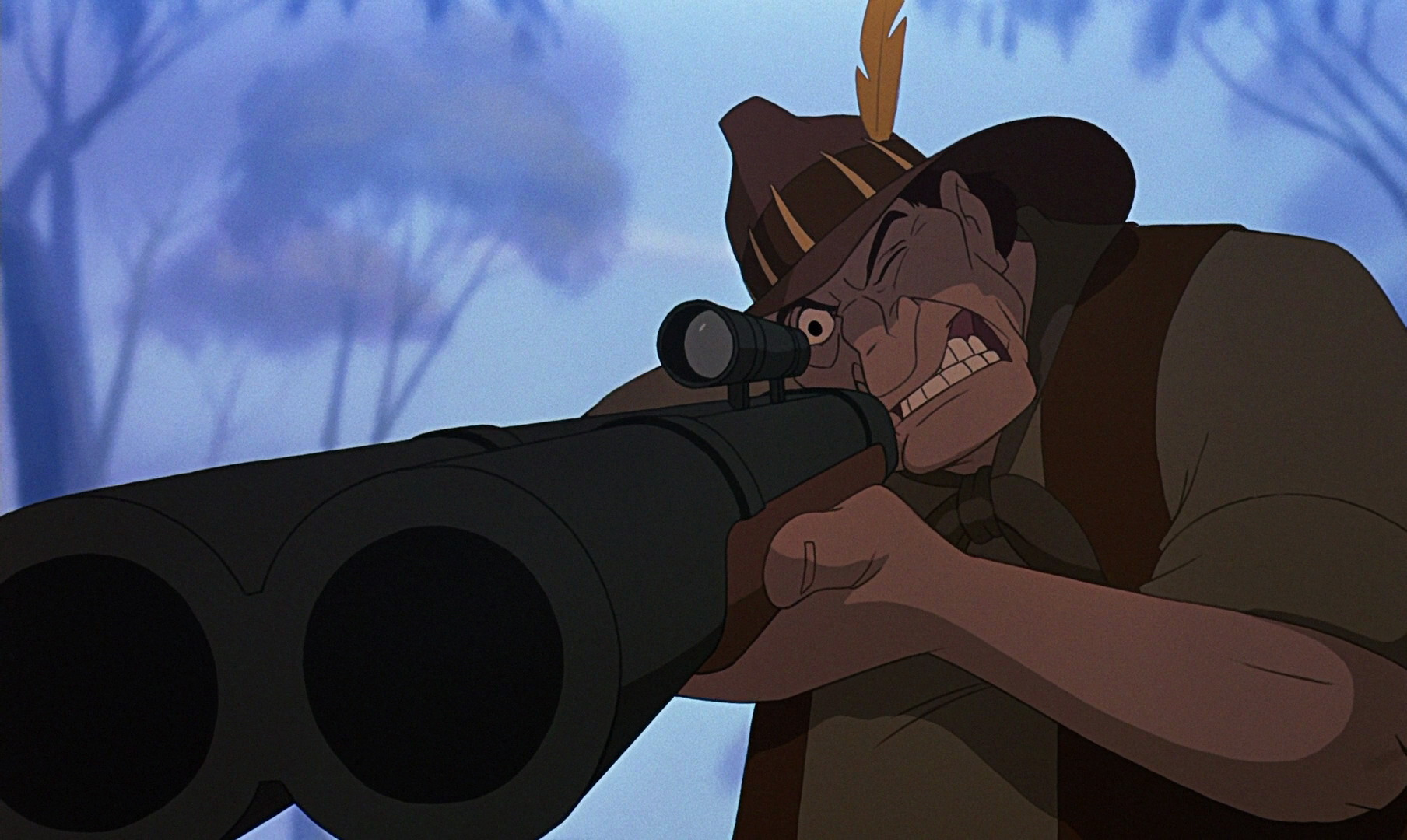
The villain of The Rescuers Down Under is a poacher. Oh, and he is a mean poacher too! He has all sorts of animals locked away in chains, he drives a monstrous cage-truck, and even abuses his faithful lizard/pet/sidekick Joanna. Not to mention he tries to feed a poor little blonde boy to the crocodiles. While all this makes it easier to despise him for the sake of the story, I can't help but mention that poachers are not always evil. I know, I know- blasphemy! But sometimes poachers are people who have no other way to feed their families, or who don't know any better, or who are forced into it. I am definitely going to get back on this topic and expand on it in the near future, but regarding this film, we all love to hate McLeach the poacher. 


My Favorite Thing About the Movie

Joanna the goanna was definitely my favorite aspect of the entire movie! In my opinion, she is more comedic relief than Johnny Depp was in Into the Woods (sorry Mr. Wolf!). Her constant antics are entertaining no matter what age you are! For your enjoyment, to end this review, I have included a scene of her stealing eggs:


I hope you all enjoyed this post, and please feel free to leave me feedback! I know it's a bit different than my previous post styles, but if you like my movie reviews, and my posts on Disney, I'll be happy to continue with those topics! Thanks for reading everyone! 

Monday, January 5, 2015

News Review: Butterflies, Betty White, and More

Hello everyone! I hope your new year is off to a great start! One of my resolutions is to write more blog posts, so here we go- I've looked at some interesting articles on the interwebs and have summarized them very briefly here for your reading pleasure: 


Butterflies Going Extinct in the USA
Just like virtually every other animal species in the world (except squirrels) monarch butterfly populations are declining. The rate of loss is so dramatic, it's like "losing every living person in the United States except for those in Florida and Ohio". 


Bindi Irwin Grown Up
Well, this isn't really news, but Steve Irwin was a huge celebrity in the world of wildlife conservation and education. His daughter, Bindi, had her own TV show, and so to see her and her brother getting older tugs at my heart strings. 


The Pope and Climate Change
Pope Francis and his teachings are a huge influence on the lives of many people, and he plans on using that power for the good of the planet. I'll give a thumbs up to that!


Seagrass Is In Trouble
Not many people are familiar with the importance of seagrass. To be honest, many of the facts on the titled link surprised me, and I plan on writing more in detail on this subject sometime. For more info, go to Project Seagrass.


Flora and Fauna's Year in Review
I have mentioned Flora and Fauna International before, and found this article of theirs really informative about what has gone on in 2014 (they talk about United for Wildlife, too!). Betty White is one of their honorary directors, and she did a PSA commercial for them- check it out below! 


Thanks everyone for reading, and I'll be posting more soon!