Pages

Saturday, September 20, 2014

Predator Culls

Predator/prey relationships are a huge factor in the balance of an ecosystem, and, as with any relationship, when one party is destroyed, so is the balance and there are consequences. A cull is a mass killing of an animal, and unfortunately, predators are often culled mainly due to fear and not scientific reasoning.

Good ol' Wile E. Coyote. Funny, yes, but also true- not even a super genius stands a chance against humans. 
Coyotes
Coyotes are considered a pest in many parts of the United States. Even though their love of scavenging gives them a valuable role in the "janitorial" section of the ecosystem, many people classify them as bloodthirsty killers. And yes, they also will hunt other animals such as raccoon, skunks, foxes, rodents, and Canada geese (we have too many geese anyway, right?). They will also attack farm animals, which is where people start getting angry.  

Controlled by trapping, shooting, poisoning, and denning (killing pups), the government is trying to protect farm businesses from the destruction these "pests" cause (and yes, this has caused a stir). The problem with this approach is that coyote populations bounce back. When more are killed, they reproduce more- it's called compensatory reproduction. They will mate at an earlier age, and have larger litters of pups, therefore completely defeating the purpose of a cull. 

There is also the giant issue of coyote contests, where people go out and kill as many coyotes as they can in a race for the grand cash prize. In my opinion, it's unnecessary and cruel to just go out and slaughter these animals in a contest, but there is a large population of people that love these contests more than their pick-up truck (not that I'm picking on a certain collective of people). But I won't tell you what to think, read about it yourself.  Also, here is a great film called "Killing Coyote" that gives a good insight. 
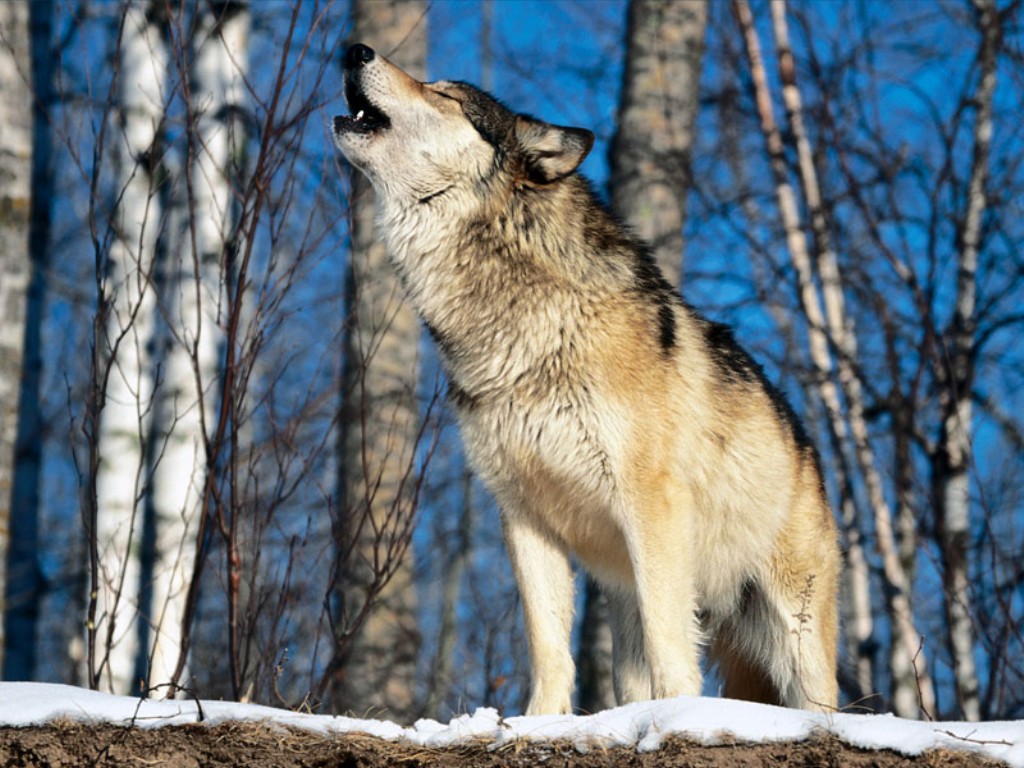

Big Bad Wolf
All too often this phrase gives wolves a bad reputation. Unlike coyotes, wolf populations don't bounce back when they are under pressure. They crumble, like a big crumbly cookie. In fact, when wolves were extirpated from the Eastern United States, coyotes moved in to fill the empty niche. You see? Every action we have on our environment has some sort of consequence. Wolves have been reintroduced into Yellowstone National Park, but unfortunately I doubt they will ever regain their historic territory (the gray area) . 


Sharks
Did you think I would go through a blog without mentioning sharks? Ha! Well, sharks are one of the predators that fall victim to mass killings. The most recent tragedy was the government-funded shark cull of Western Australia, in an effort to make beaches safer. The plan was to kill as many sharks as they can by catching and shooting them in the head, or letting them die and rot on baited hooks, which would theoretically help bathers and surfers. But the funny thing is, when sharks are killed, more sharks step into their niche, or their place, which doesn't accomplish anything. Even funnier, of the almost 200 sharks killed, none of them were great whites, which was the targeted species. Thankfully, this cull has been called to an end, and you can read about it here and here 

How can you not love sharks? 
Predator control depends on public acceptance. Isn't it a whole lot easier for legislation on wolf control to pass than if someone proposed the mass killing of bunny rabbits? There needs to be economic, social, and especially biological justification for predator control, and only lethal methods should be used if nothing else works.

I bet they are all tweeting about palm oil, I can tell. Except the guy in the striped shirt, he's on reddit /r/gonewild.
If you are disturbed by anything you read about in this post, or any of my blog posts, please do something! Take a little action, go on Google, read about these topics, and spread awareness of these issues. A simple tweet can go a long way, folks, and tweeting about a conservation issue would do a lot more good than tweeting a picture of your lunch. 

As always, thanks for reading everyone! 


Consumer Responsibility

Be aware of what you buy! 
When you buy a company's products, you are supporting them and their practices. For example, when you buy a steaming bowl of shark fin soup (which I hope none of you would do), you are encouraging people to keep pulling sharks out from the ocean and slice off their fins. So, long story short, be aware of what you are buying and be a responsible consumer! 

Here are some easy labels to look for: 


Rainforest Alliance


Marine Stewardship Council


Here's a link to some other food labels, too! 

Shoutout to LUSH Cosmetics- proving one company can make a difference! Many of their products contribute to a charity pot, benefiting 600 charities! They also raise awareness for many issues, including the FinFree movement (they even had a petition during shark week!). 
Oh donuts, I always knew you were good
Another shoutout to Dunkin Donuts and Krispy Kreme for sourcing their palm oil from sustainable sources! I've mentioned before that palm oil is a huge factor in deforestation, especially in lush, biologically important rain forests. If these mega-mouthwatering donut chains are pushing for more sustainability, hopefully other fast food restaurants will follow!! Here's an article on it. 

Thanks for reading everyone! 

Monday, September 8, 2014

A History Lesson

In honor of school resuming, I'd like to take a minute to talk about the men who led the American conservation movement. 


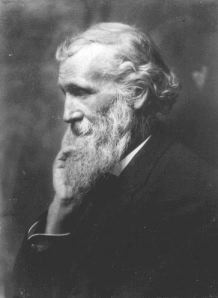
John Muir
Muir is most famous for his "Preservationist Ethic"=nature has intrinsic value. He is considered the "Father of the National Park System" because of his role in creating Yosemite, Sequoia, Mt. Rainier, Petrified Forest, and Grand Canyon National Parks. To protect these parks, he formed the Sierra Club. In 1903, he assisted Teddy Roosevelt in his conservation programs, many of which are still in effect today.  


Gifford Pinchot
Pinchot was the 1st US Forest Service chief, after studying forestry in France. As chief forester, he increased the number and size of national forests, and constructed proper managerial practices for them. He believed in the "Resource Conservation Ethic"=if you manage resources properly, they will be around for generations to come. His work earned him the reputation as "Father of American Conservation".


Aldo Leopold
Considered the "Father of Wildlife Management", Leopold aimed to utilize and conserve resources at the same time. He is known for the "Evolutionary-Ecological Land Ethic"=conservation based on succession, the fact that ecosystems change. Among his published works is the first Fish and Game Handbook used to catapult game management.


Theodore Roosevelt
Our 26th president was quite a force in wildlife conservation! He recognized ecosystems, he believed in conservation through wise use, and that science is the cornerstone of conservation (somethings I think we need to focus more on in today's wold). He made the National Park System, with the help of Mr. Muir and Mr. Pinchot, and because of what he did, the USA is considered one of the best models of wildlife management in the world! (In the future, I will post more about Teddy- right now I'm reading a book about him.) 
You know Theodore Roosevelt was awesome because he was played by Robin Williams (*tries not to cry......cries a lot*)

Well there ya have it folks, four of the founding fathers of wildlife conservation in the US of A. Keep a look out for upcoming posts about everything from tea brands to coyote contests, and, as always, thanks for reading!! 

Thursday, September 4, 2014

Book Review: Jeff Corwin


Jeff Corwin is famous for his work in wildlife conservation, and I have been a fan of his since I was little. While it's hard to compare anyone to Steve Irwin, I would say Jeff Corwin is the American version of the late Crocodile Hunter, teaching audiences about animals from around the globe with his funny and educational TV shows ("The Jeff Corwin Experience" has over 13 million viewers in the US!) 

In this book, he narrates a series of tales about the world's most endangered species of animals. "100 Heartbeats" means that 100 or less of the animals of these species exist in the wild. And not only does this book talk about heartbeats, it also pulls on heartstrings- I found myself crying several times over the atrocities some of these animals face. But on the flip side, Mr. Corwin's outgoing and entertaining personality shines through, and kept me hungry for the story on each following page. Even for someone educated in animals and conservation like myself, this book was an eye-opener- it showed what is going on on the front lines of these issues. 

In short, I recommend this book to everyone. I absolutely loved it, and I think if more people read this piece, the general public would have a better appreciation for wildlife and those fighting to protect it. So do yourself a favor and buy it! 

For fun, here's a video of some of his shows' clips! Can you see why I adore this guy?


Here are a few links to some more of Mr. Corwin's projects:
TV Shows and Appearances
Another Book of His
Emerald Canopy Rainforest Research Association

With the summer ending, I look forward to posting more often, so keep checking back! And of course (you guessed it:) thank you for reading! 


Sunday, August 10, 2014

Traditional Medicine Hurts

Traditional medicine has a huge effect on wildlife worldwide. 

What is it? 
Traditional medicine seeks to help the body's balance by using natural substances, such as herbs. But the strong Asian demand for traditional medicine has promoted a lot of destruction to wildlife because many "cures" involve animal parts. The trade of traditional medicine is a billion-dollar industry, and growing. Its products are used by up to half of the world's population, so it is not at all limited to Asian countries. 

What other practices does it influence?
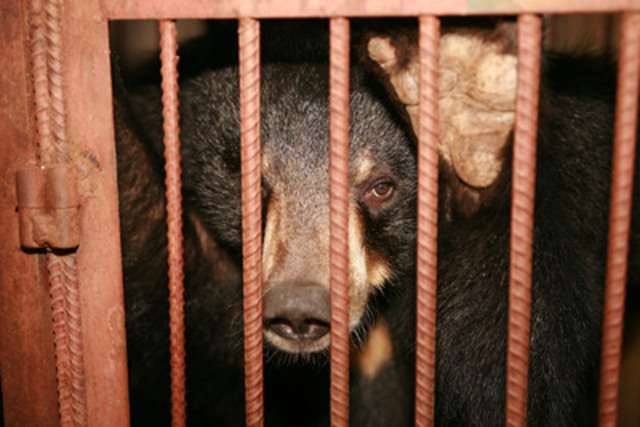
This is a very nice picture compared to what I could've put here, it's seriously heart-breaking stuff.
Bear Bile Farms
A farm is a happy place with sunshine, horses, fresh-baked pies, and rolling green hills, right? Not this type of farm. In parts of Asia, such as China and Vietnam, bears are kept in tiny cages, in horrid conditions, and "milked" for their bile. Bile is a digestive fluid stored in the gallbladder, and not meant to exit the body, like milk is. So, to extract it, bears are punctured with steel rod catheters in their abdomen, which is not only extremely painful, it often leads to infection and tumors. I invite you to Google for pictures, but beware it is very graphic. It is estimated that 10,000 bears are subject to this fate in China alone. Bear bile is used in traditional medicine as a cure for fever and convulsions, and is also in household products, but this torture is completely unnecessary- there are many inexpensive synthetic and herbal alternatives. Read more here, and if you can, please donate to help stop this cruelty. 


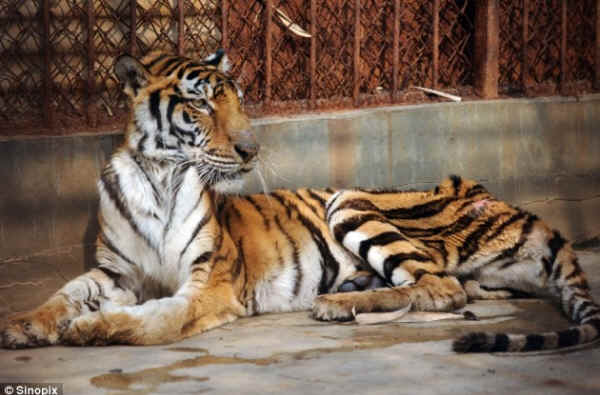
No this is not the Pink Panther with striped paint, this is really happening right now guys...
Tiger Farms
Researching for this blog, I was appalled to find this...Tiger farms. Wild tigers are poached for their body parts but this may just be worse than that. In Asia, tigers are bred. Not for biodiversity, not for the sake of the species, and not to be released into the wild. They are bred for their meat, their fur, their bones, and for entertainment. Kept in small enclosures, malnourished, abused, and butchered at "slaughter parties". Tiger parts in traditional medicine, particularly tiger bone wine, is only a part of the monetary influence for tiger farms, it is also funded by demand of lavish products by the wealthy, and much much more. I'm going conclude this paragraph only because I can't emotionally handle this right now, and I will have to come back to this subject in the future to elaborate. This is yet another completely unnecessary practice only successful because of people's greed and utter disregard for the value of life. Here's a news report about it. 


A little comparison here- rhino horn is worth more than twice the value of gold.
The Ivory Trade
Rhino and elephant ivory has always been valued. Powdered rhino horn is seen as a cure for gout and fever, and its demand has increased since a Vietnamese official claimed it cured his cancer (an official who I'd personally love to pulverize into powder- see if he likes it!). I've already talked a lot about the consequences of the ivory trade, but I'm just mentioning it here because traditional medicine is one of the reasons why poaching rhinos and elephants is so profitable. 

What can we do to stop it?
Consumer awareness. If people knew they were buying a product that is causing the extinctions of tigers, I don't think they'd be as likely to buy it. Just like people purchasing shark fin soup are rarely aware of its damage. So spread the word, tell your friends how incredibly messed up this is. And of course, please don't buy any traditional medicine products with animal components.  

Keep in mind that not all traditional medicine involves animal parts, and so I am not condemning all forms of traditional medicine. In fact, less than 10% of Chinese medicine involves animal parts. So can we just get rid of that 10%? Also, bears and tigers are not the only animals effected, other victims include many species ranging from snow leopards to seahorses. 

This "medicine" is more like a disease killing our precious wildlife, and such pointless destruction needs to stop. 
Read more about it here.   

Thank you for reading everyone! 

Wednesday, August 6, 2014

NBC's "Shark Hunters"

This blog post is basically a rant about how incredibly idiotic NBC’s “Shark Hunters” show is. Yes, sharks are cool, and often feared. But that does not make it right, by any means, to glorify killing them on a major broadcasting network.

All of my shark-love aside, they are killing species that are listed as "Vulnerable" on IUCN's Red List, such as shortfin mako and thresher sharks. "Vulnerable" is right before "Threatened" and "Endangered", and it means there AREN’T MANY OF THEM LEFT and their species could DISAPPEAR FOREVER. And this show is promoting the slaughter of them? What?! 
The thresher shark boasts a beautiful long tail. 
Let’s make a little comparison. What other animals are in that sort of predicament? How about pandas- they’re a good example. What do you think public opinion would be if there was a show called “Panda Hunters”?  People would riot! Animal lovers everywhere would be outraged and disgusted! Those shows would completely damage all of the conservation efforts trying to save these animals! So why are sharks any different? C’mon people. Get your stuff together.
I found this photo from a pretty great blog post ranting about poaching. Check it out http://rantwtf.blogspot.com/2011/05/wtf-rhino-slaughter-continues.html
Do you agree that "Shark Hunters" is dumb? You can read more about it here!  And, more importantly, help us shut it down!! Spread the word on Facebook, and Twitter, using the hashtag: "#cancelsharkhunters". You can also sign this petition. 

Jack Donaghy is the CEO of NBC, so you guys should listen to him! 
As a conclusion to this post, and in good humor, I’ve come up with a few suggestions for shows that NBC can air instead of “Shark Hunters”:

“Poaching Poachers”- teams of skilled marksmen compete to shoot as many ivory poachers as they can out in the rugged environment of Kruger National Park, South Africa. It can still be family-friendly, they can shoot the poachers with tranquilizers (instead of killing them) and drag them off to jail. 

“White-collar VS White-tails”- a documentary on rich sportsmen who spend their weekends looking for the biggest white-tail deer in the Eastern United States, touching on the subjects of responsible firearm use, and wildlife management. To spice it up, have them take their prissy wives out with them!  

"Shark Lovers"- a show emphasizing the difficulties of conserving these amazing animals that almost everyone fears, and combating those that want to destroy them. Ratings would be incredible because barely any of the general public is aware that people out there actually love sharks, and that they need help. 

Again, if you believe "Shark Hunters" is wrong, don't sit idle, help us shut it down! Thanks for reading everyone =) 

Saturday, July 26, 2014

Cool Animals

In this post, I'll talk about a few animals I think are cool, and look at the issues affecting them. 

Okapis
Okapis are (arguably) my favorite animal ever. Why? They epitomize coolness. Have you ever seen one? Well, here's a picture:

Confused? It looks like a horse with a zebra butt, but in fact these animals are the closest living relatives to the giraffe.(More okapi facts and a video of a baby okapi!) They are found in the Ituri Forest, a rain forest in central Africa. The Ituri Forest is located in a part of Africa that is very conflict prone, and so funding for local conservation efforts is hard to come by. The animals here, including the okapis, elephants, primates, and antelopes, are victims of unsustainable agriculture, logging, the ivory trade, and slaughter for bushmeat. (Learn more here.)

Blob Fish
A little less "cool", a little more "weird", is the blob fish. They live in the deep ocean and have blob-like bodies that are less dense than water, allowing them to float along without expending much energy. (More on the blob fish.) And they look pretty ridiculous: 

They are often victims of by-catch by deep-sea trawler boats, a fate many animals face. Sea turtles, seals, and dolphins are all victims of by-catch, and it is becoming a huge issue. 

American Burying Beetle
This beautiful insect is in the Coleoptera family (beetles), and there are more beetle species in the world than anything else. But unfortunately, this beetle is critically endangered- they went to inhabiting 35 states to now only 5. 

The burying beetle parents both share responsibilities caring for their young (a rare behavior among insects). Their main diet is carrion- the carcasses of dead animals- so they are essentially tiny little vultures, helping to clean up the forest floor and recycle organic materials. More information

Markhor
This mythical-looking goat can be found in India, Pakistan, and Afghanistan. Not only does it wear some stunning horns, this goat can climb trees too, and has been seen up in trees 20 feet tall. That's all the proof that I need to convince me this animal is, in fact a wizard. 
The markhor's horns make it a prized hunting trophy, and its horns are also very valuable in traditional Asian medicine. Fetching over $2200 a pound for their horns, as you could imagine, it is very hard to conserve these mystical animals. More here


These are just a few of the many, many animal species we are about to lose forever. At least 10,000 species go extinct every single year. That's over 1,000 times higher than the natural rate of extinction. We are in the middle of a biodiversity crisis, and don't think for one second that the human species is safe from all this destruction we cause in the world. Please, think. We can all make a difference by conserving resources. Save electricity by not leaving your TV running. Look at the label for recyclable content next time you purchase something. Don't contribute to landfills by being wasteful with your commodities. Seriously, just think. 

I hope you enjoyed this post, and of course, thank you for reading!!